The AI Toll Gate: Why SAP Wants the Legacy Installed Base on Private Cloud Edition
The AI Toll Gate: Why SAP Wants the Legacy Installed Base on Private Cloud Edition
What You'll Learn in This Week's Newsletter
This week we argue that SAP's biggest AI asset is not Joule, Business AI or even S/4HANA. It is the legacy installed base. We explore why Private Cloud Edition may represent far more than a cloud migration strategy, how it could become the AI toll gate through which future enterprise agents access business processes, why this could create significant value for both SAP and its customers, and why continuous AI-driven innovation may ultimately disrupt the traditional systems integration model.
SAPs Strategy isn’t what you think !
Most people believe SAP wants customers on Private Cloud Edition because cloud subscriptions generate predictable revenue.
We think they're looking at the wrong prize.
SAP's biggest AI asset is not Joule.
It is not Business AI.
It is not Agent Gateway.
It is the legacy installed customer base.
Thousands of ECC, BW and legacy SAP customers collectively represent one of the largest repositories of business process knowledge, transactional history and operational context on the planet and SAP need to monetarise its use.
As enterprise software evolves from users to agents, that installed base becomes extraordinarily valuable to SAP.
Private Cloud Edition is not simply a migration destination.
It is the foundation of SAP's future AI toll gate and their 5x Revenue growth strategy.
SAPs first line of defence = Control
For five decades SAP built one of the largest enterprise application estates in the world.
Today, tens of thousands of organisations still run ECC, Legacy S/4, BW and legacy SAP landscapes that support core finance, procurement, supply chain, manufacturing and customer operations.
As third party Agent-to-Agent commerce, MCP frameworks and composable enterprise AI mature, the threat to SAPs dominance as the process and data layers provider becomes threatened, if SAP are thinking composable agentic so are the PE backed start ups.
So the value of controlling access to the business context locked in SAP increases dramatically. Controlling its access SAPs first line of defence.
The future opportunity is no longer measured in users.
It is measured in millions of autonomous interactions between enterprise agents. And SAP are sticking a chip and pin machine in to the new AI gateways
See content credentials
Market Reality
Much of the market still interprets RISE and Private Cloud Edition as cloud migration programmes (at best maintain and make safe, seldom innovation).
That view is increasingly outdated.
The real strategic objective appears far larger.
SAP has spent the past several years assembling the architecture required to govern, orchestrate, observe and potentially monetise future agent interactions.
Viewed individually, Business Technology Platform, Integration Suite, Event Mesh, Business Data Cloud, Joule and Agent Gateway appear to be separate initiatives.
Viewed together, they look increasingly like components of a future enterprise AI control plane.
Private Cloud Edition is the mechanism that brings the legacy installed base onto that platform and into SAPs vending machine (control plane).
The migration is not the destination.
The migration is how SAP gets customers onto their AI motorway and into their tollgates.
CIO Perspective
The critical architectural question is not whether AI agents will arrive, they have
So the question is, who governs them ?
Organisations running isolated on-premise environments may retain greater freedom, but they will increasingly sit outside the emerging ecosystem through which enterprise agents interact.
Private Cloud Edition creates a standardised environment where SAP can govern identity, security, orchestration, observability and process access at scale.
That is exactly the infrastructure required for an agent economy.
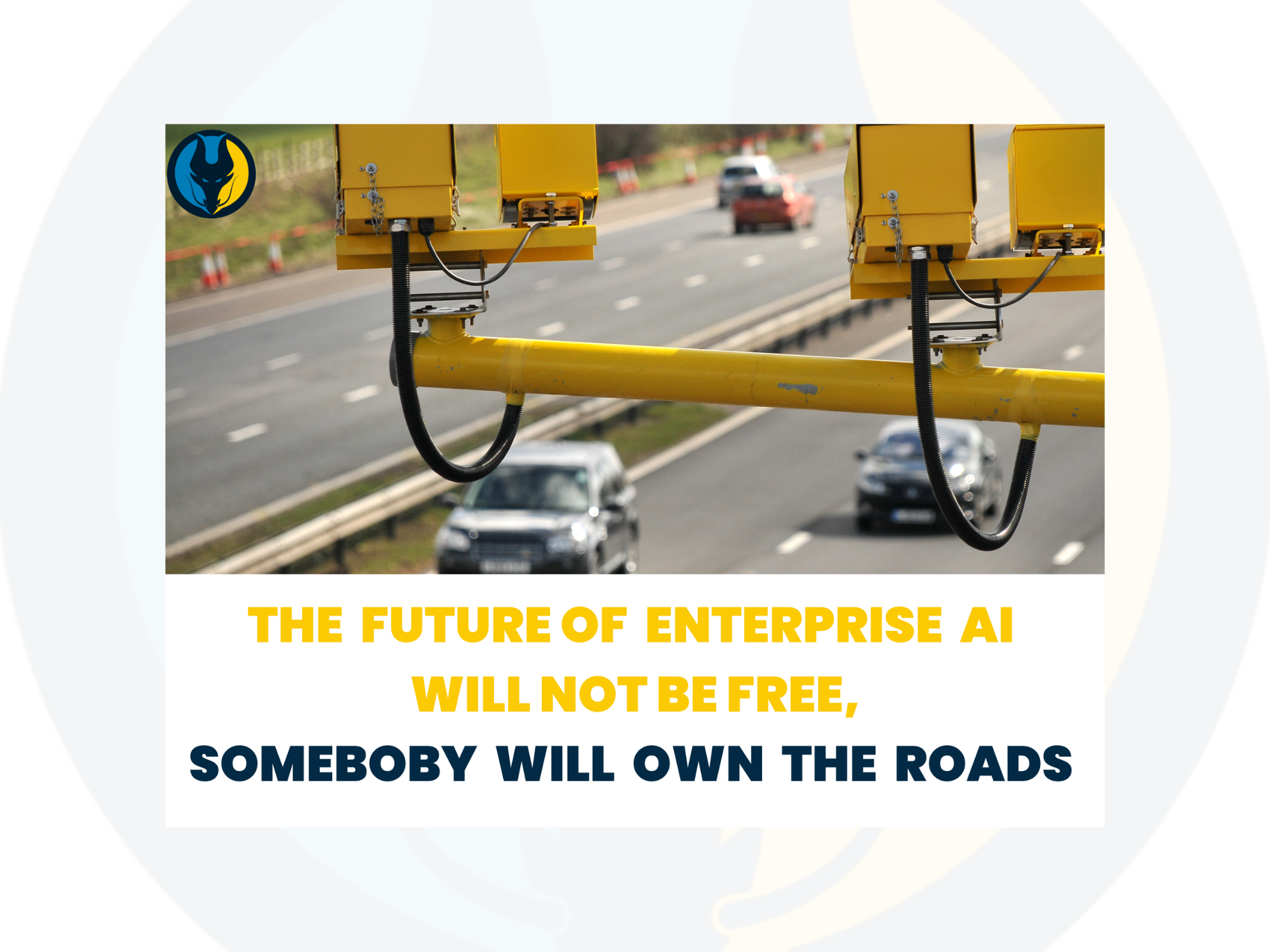
SAP is not building the agents.
SAP is building the roads.
CFO Perspective
Historically SAP monetised users.
The future may be very different.
Agent interactions, business events, orchestrations, transactions and AI-driven process execution all create potential future consumption models.
The economics become compelling when viewed at scale.
An organisation with 5,000 SAP users could eventually generate hundreds of thousands or even millions of agent interactions every day.
The strategic value no longer sits with the software alone.
It sits with the AI platform through which those interactions occur.
That is the toll gate.
Strategic Question
If enterprise AI becomes the dominant operating model, who owns the control plane through which enterprise agents interact with core business processes?
The organisation that owns that control plane will occupy one of the most valuable positions in enterprise technology.
Our view is that SAP recognised this years ago and has quietly been building towards it ever since.
What Leading Organisations Are Doing
The most forward-looking organisations are beginning to look beyond migration programmes and upgrade projects.
Instead, they are asking how they position themselves for continuous innovation.
Agentic architectures enable organisations to introduce new capabilities continuously rather than waiting for major transformation events every five to ten years.
This is Enterprise Kaizen at machine speed, which is one of our big themes.
The winners will not be those that complete the largest transformation programmes.
They will be those that deploy, govern and improve enterprise agents faster than their competitors.
Dragon ERP Perspective
The most interesting consequence of this shift may not be its impact on customers.
It may be its impact on traditional systems integrators.
The economics of many large SIs were built around periodic mega-programmes, multi-year implementations and large-scale transformation events.
Agentic architectures challenge that model.
Continuous innovation requires different capabilities.
Smaller interventions.
Faster deployment cycles.
Business process expertise.
AI governance.
Architecture thinking.
Value realisation.
As enterprise transformation becomes continuous rather than episodic, the advantage shifts away from industrial-scale delivery factories towards organisations that can continuously optimise the operating model.
That should concern every monolithic SI in the SAP ecosystem.
We are already seeing a shift in how the big firms operate, Dragon is a disruptor boutique, we operate on a four man brick fractional delivery model, and we are seeing SI delivery COEs popping up and copying our model, so we are sure we will see a run of them in September, no more mega modernisation programmes, the money is in Enterprise Kaizen. (shout out to Jeet Poptani, told you mate)
Executive Takeaway
Private Cloud Edition is not simply a cloud strategy.
It is SAP's mechanism for bringing the legacy installed base onto a future enterprise AI platform.
The legacy installed base is the prize.
The platform is the toll gate. There never has and never will be free vend in the enterprise ecosystem, you will pay for your AI one way or another.
SAP gains ownership of the roads through which enterprise agents will increasingly travel.
Customers gain access to continuous innovation, continuous optimisation and continuous evolution.
The biggest disruption may not be felt by SAP customers.
It may be felt by the traditional transformation industry that grew up around them.
The future belongs to agents.
SAP intends to own the roads.
Dragon intendeds to own AI Leap Frog and Enterprise Kaizen and helping customers maximise their investment in SAP. Need help with your SAP roadmap message Paul and Alisdair.
Need help
That's where I come in, message me or buy me a coffee its that simple and lets have a chat
Alisdair
About the Author
Alisdair Bach helps CIOs and CFOs solve complex SAP problems and shape what comes next. He advises boards, investors and executive teams on SAP strategy, assurance, architecture, commercial decisions and how SAP should be consumed, delivered and embedded across the enterprise.
An independent SAP analyst, author and lecturer, Alisdair challenges conventional industry thinking. He is the author of The SAP Omniverse and the originator of SAP Upcycling and Enterprise Kaizen. His work anticipated the extension of ECC and the arrival of AI and Joule on existing SAP landscapes, challenging the assumption that every organisation must rip out its current estate and start again.
Through Dragon ERP, Alisdair combines original thinking with decades of practical delivery experience across private equity, public sector and international organisations. When an SAP programme is struggling, he provides board-level assurance, forensic diagnosis and experienced turnaround leadership to help executives regain control and determine the right way forward.