SAP ECC Armageddon is Cancelled
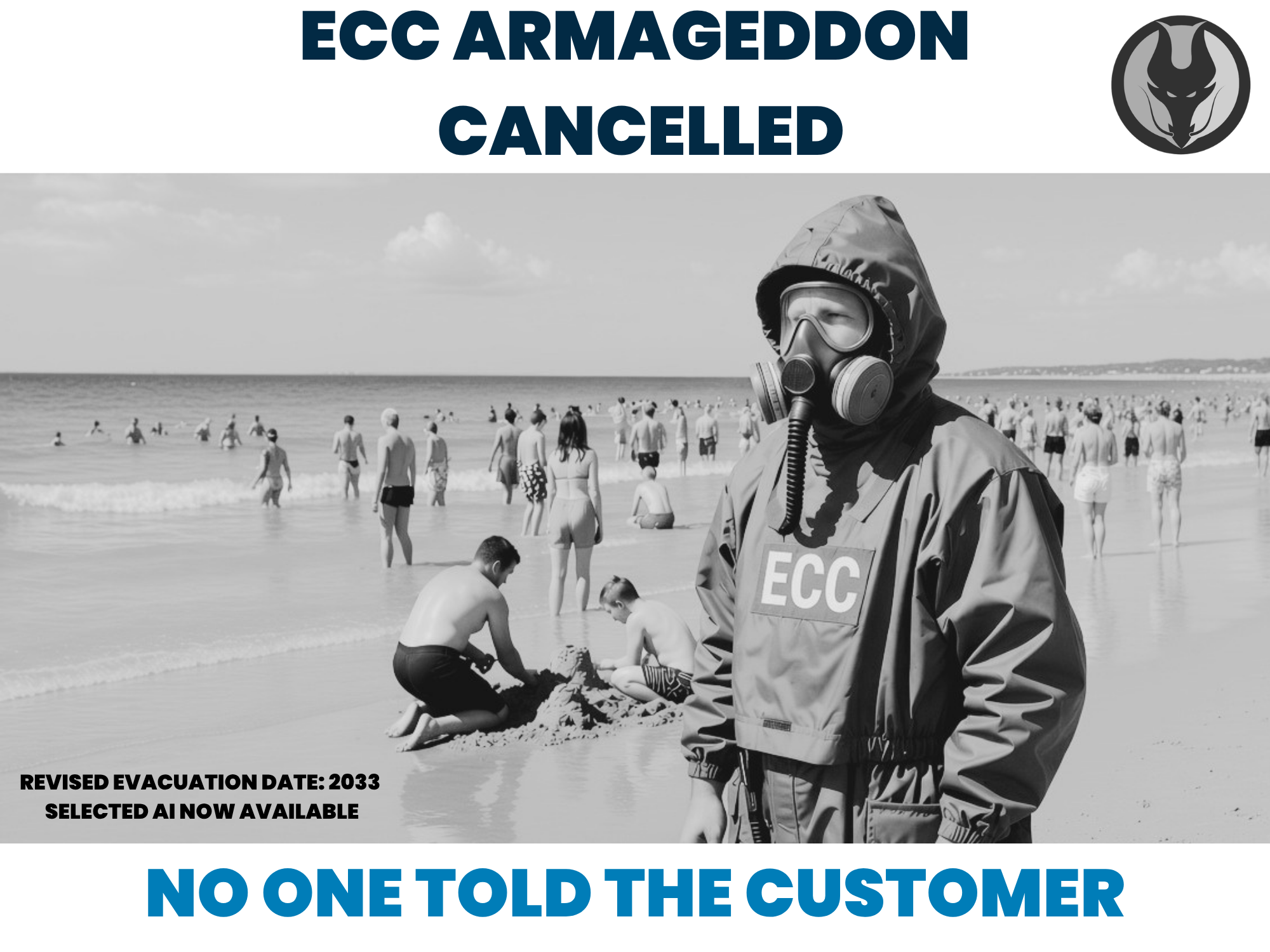
FORGET ECC ARMAGEDDON 🚨
“You must migrate from ECC to S/4HANA before the 2027 deadline or the world will stop!” 💣 Here we go again.
The usual suspects arrive with the familiar S/4HANA value proposition:
Real-time insights.
Simplified processes.
Improved performance.
Embedded analytics.
Automation and AI readiness. Better user experience.
Cloud scalability.
Clean core.
A future-ready SAP landscape.
Lovely. Where do I sign?✍️
Then comes the awkward bit.
If I start now, I might get it in 2028. If I am lucky.😅
By then, much of the promised transformation will probably have been descoped to protect the date and budget.
The business case will have faded into the background, the data problem will have arrived late, and the programme will be celebrating technical go-live as though that were the same as creating value.
Gulp.
There is another small problem. The 2027 generation of S/4HANA could be substantially more agentic, composable and organised around line-of-business capabilities.
So the architecture I begin designing today may already be behind SAP’s direction before I switch it on.
Meanwhile, the clever money is moving elsewhere.
✅It is being spent upcycling the SAP estate customers already own.
✅Improving data.
✅Making ECC safe. Removing genuine technical risk.
✅Using composable SAP capabilities including S/4 and Suite, Joule, BTP and agentic microservices to create value now rather than waiting for the end of a migration.
💥And what about the terrifying deadline?
Mainstream ECC maintenance still ends in 2027, with extended maintenance available until 2030. SAP has also created a transition option through 2033 for eligible customers with large, complex estates that meet its conditions.
ECC and on-premises S/4HANA customers are no longer automatically excluded from AI either. Customers that make the required cloud commitment can access selected Joule and AI scenarios while their existing systems continue operating.
So the world does not stop in 2027.
Some customers should move to S/4HANA now. Some should convert selectively. Others should stabilise ECC, upcycle it and adopt new capability around it. Most large organisations will need a mixture.
Dragon ERP is the exception to the usual rule.
We do not arrive with the destination already chosen.
We establish what you have, what is at risk, where value is trapped and which changes are actually worth funding.
That is Enterprise Kaizen:
❤️Make Safe,
❤️Maintain,
❤️Innovate
❤️and Experiment.
ECC is not the emergency.🚨
Making a rushed, expensive decision because somebody frightened your board is.
If you need help speak to a Dragon
hashtag#SAPhashtag#ECChashtag#S4HANAhashtag#EnterpriseKaizenhashtag#SAPStrategyhashtag#DragonERP
Enjoy the summer, and we'll see you in September with plenty of new ideas to discuss.
Need help
That's where I come in, message me or buy me a coffee its that simple and lets have a chat
Alisdair
About the Author
Alisdair Bach helps CIOs and CFOs solve complex SAP problems and shape what comes next. He advises boards, investors and executive teams on SAP strategy, assurance, architecture, commercial decisions and how SAP should be consumed, delivered and embedded across the enterprise.
An independent SAP analyst, author and lecturer, Alisdair challenges conventional industry thinking. He is the author of The SAP Omniverse and the originator of SAP Upcycling and Enterprise Kaizen. His work anticipated the extension of ECC and the arrival of AI and Joule on existing SAP landscapes, challenging the assumption that every organisation must rip out its current estate and start again.
Through Dragon ERP, Alisdair combines original thinking with decades of practical delivery experience across private equity, public sector and international organisations. When an SAP programme is struggling, he provides board-level assurance, forensic diagnosis and experienced turnaround leadership to help executives regain control and determine the right way forward.